Buckeye Insulation Pros
(623) 260-2057
Spray Foam Insulation in Buckeye AZ
A garage can hit 130 degrees without even trying. That heat doesn’t just stay out there—it pushes through the drywall, through the studs, and into the rooms you actually live in. By sunset, your garage walls are still hot, and they keep feeding that heat into the house well into the night. If those walls and ceilings aren’t sealed up right, your AC is fighting a losing battle. That’s when you need spray foam insulation in Buckeye, AZ. It’s not magic, but it does something most other insulation can’t—it blocks both heat flow and air movement at the same time.
How Heat Actually Gets Into Your House
Heat moves toward cold. That’s just physics. In the middle of summer, you’ve got 110–115 degree air outside, and maybe 75 inside if your AC is keeping up. That temperature difference is what drives heat through your walls and ceilings. But it’s not just about temperature—it’s also about air movement. Hot air doesn’t just sit still. It finds gaps: around outlets, top plates, attic penetrations, garage walls, and anywhere drywall meets framing. Fiberglass can slow down heat, but it doesn’t stop air from moving through it. That means heat still sneaks in.
What Spray Foam Actually Is
Spray foam is a two-part material mixed on-site. It gets sprayed as a liquid, then expands into a foam that hardens in place. There are two main types we use:
- Open-cell foam: softer, expands more, good for interior walls and sound control
- Closed-cell foam: denser, higher R-value per inch, and acts as a vapor barrier.
Closed-cell is usually the better call for garages,
wall insulation, and
attic insulation because it handles heat load better and adds some structural strength. The big thing to understand is this: spray foam doesn’t just sit between studs like a blanket. It bonds to the surfaces and creates a continuous seal.

Where It Makes the Biggest Difference
Not every part of a house needs spray foam or
blown-in insulation. But there are spots where it really earns its keep. Garage walls that connect to the house are a big one. If that wall isn’t sealed properly, it’s basically a hot plate radiating into your kitchen or living room. Attics are another. In a typical setup, you’ve got insulation sitting on the attic floor and a vented attic above it. But that attic can hit 140+ degrees. Spray foam at the roof deck turns that attic into a conditioned space, cutting down the heat load on everything below. Then there are problem rooms—bonus rooms, additions, or areas with uneven temperatures. That’s usually where air leakage is happening, and foam can lock it down.
Others Services That We Offer:
How We Install It
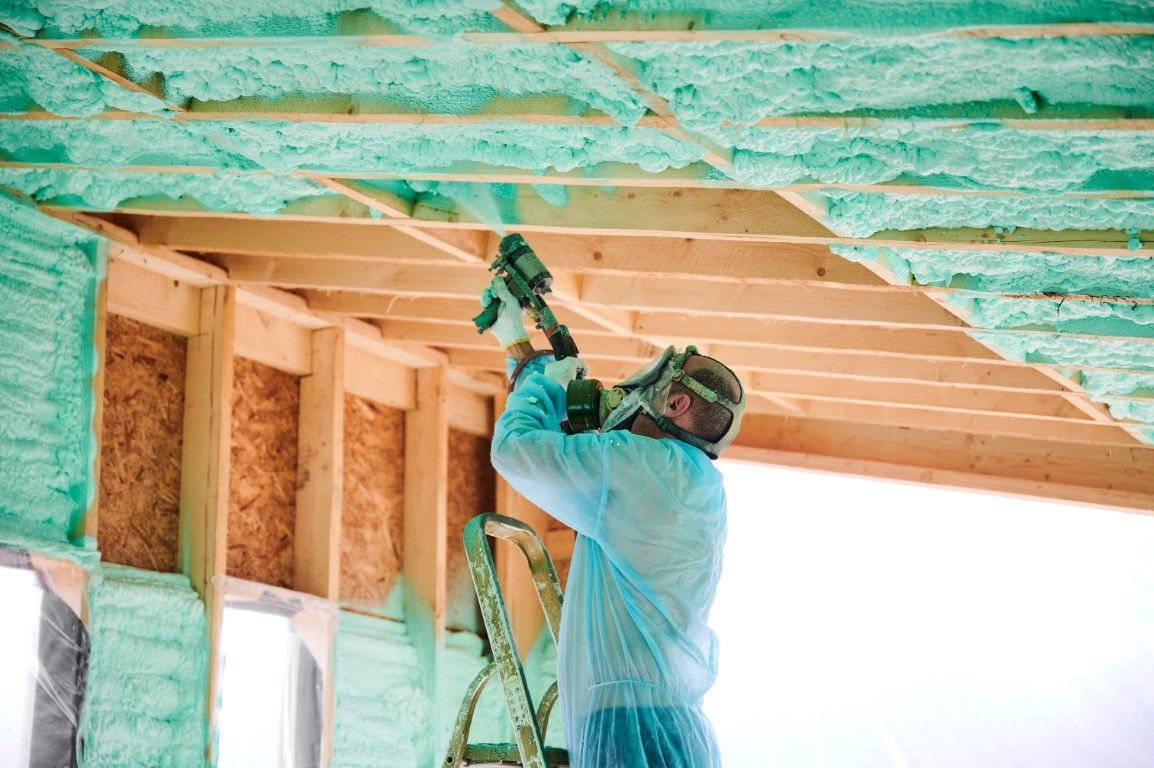
This isn’t a roll-it-out-and-go kind of job. There’s prep involved. First, we look at the space. We check the framing, wiring, and anything that might get in the way. If we’re working in a garage or attic, we make sure surfaces are clean and dry. Spray foam sticks best when it’s applied to solid, dust-free surfaces. We also mask off areas that shouldn’t get foam—windows, doors, floors, and anything mechanical. Once that foam hits something, it’s not coming off easy. The equipment matters too. We use a proportioner that heats and mixes the two chemicals at the right ratio. Temperature and pressure have to be dialed in, especially in Arizona heat. Too hot or too cold, and the foam won’t expand or cure properly.
Why It Works Better Than Fiberglass
Fiberglass has its place. It’s cheaper, and it works fine in some situations. But it has two weaknesses in this climate:
- Air movement – it doesn’t stop it
- Gaps – it has to be perfectly installed to perform well
Spray foam doesn’t rely on being perfectly cut and fitted. It expands into place and seals everything. That’s the difference. When you stop air from moving, you’re not just slowing heat—you’re blocking the main pathway it uses to get inside.
The No-BS Take: When It’s Worth It
Spray foam costs more. No way around that. So the question is: when does it make sense? It’s worth it if:
- Your garage shares walls with living space and gets brutally hot
- You’ve got rooms that never stay comfortable
- Your AC runs constantly in summer
- You’re dealing with high power bills and don’t know why
It’s probably not worth it if:
- You’re insulating a basic interior wall with no heat load
- You’re on a tight budget and just need something functional
- The space already has decent air sealing and insulation
Sometimes, a combination works best—spray foam in key areas, fiberglass elsewhere. That’s usually how we approach a full house.
What to Expect After It’s Done
You’re not going to walk in and feel instant cold air pouring out of the walls. That’s not how insulation works. What you’ll notice is consistency. Rooms hold temperature longer. The AC cycles less. That garage wall doesn’t feel like it’s cooking from the inside. Over time, that adds up to lower energy use and a house that’s easier to live in during the summer. If you’ve got a room that won’t stay cool or your energy bills keep climbing every summer, it’s worth looking at. We can walk the space, check where the heat’s getting in, and tell you straight if spray foam makes sense there—or if there’s a simpler fix.
FAQs About Spray Foam Insulation
What makes spray foam insulation different from other types?
Spray foam expands after application, so it seals gaps and cracks that other insulation types often miss. That means it not only slows heat transfer but also blocks air leaks, which is a big deal in hot climates.
Is spray foam insulation safe for my home?
Yes, once it’s properly installed and cured, it’s safe for residential use. Professional installation matters here since correct mixing and application ensure the material performs as intended without issues.
Where can spray foam insulation be installed?
It works well in attics, walls, crawl spaces, and even around hard-to-reach areas like corners and joints. It’s especially useful in places where air leaks are common and traditional insulation struggles to fit tightly.
Will spray foam insulation lower my energy bills?
It usually does. Since it seals air leaks and improves thermal resistance, your cooling system doesn’t need to run as often. Many homeowners notice reduced energy use within the first few billing cycles.
How long does spray foam insulation last?
Spray foam is designed to last for decades without sagging or settling. As long as it’s installed correctly and stays protected from damage, it maintains its performance over the long term.
Is spray foam insulation worth it in hot areas like Buckeye?
Yes, it can make a noticeable difference. It helps block outside heat and keeps indoor air from escaping, which is especially helpful in places where temperatures rise quickly and stay high for long periods.