Buckeye Insulation Pros
(623) 260-2057
Cheap Spray Foam Insulation in Buckeye: What to Check Before You Buy
A low price gets attention, especially on a large home, shop, or warehouse. The problem starts when a bid sits far below other quotes and the scope no longer matches. The material may be different. The proposed thickness may be lower. The installer may skip prep work. Product records may be missing.
Buckeye property owners are hearing more talk about very cheap imported spray foam. Some people describe it as Mexican spray foam. That label does not tell you whether a product is good or bad. A product made in Mexico can meet strong standards, and a product made elsewhere can fall short. The useful questions concern the manufacturer, technical data, batch records, code documents, installer skill, and written scope.
The safest buying choice is not the highest quote or the lowest quote. It is the quote that clearly states what will be installed, how much will be installed, and who stands behind the work. Property owners comparing bids should first understand how spray foam insulation works and what separates a full professional installation from a material-only price.
Low Price Alone Does Not Prove a Bad Product
A low bid can come from a contractor with lower overhead, a smaller crew, better purchasing terms, or a different material system. Price alone does not prove that the product is inferior. Different buildings call for different materials and methods. Our insulation services page explains the main systems we install and where each one fits.
A very low bid still deserves a closer look. Spray polyurethane foam is a manufactured two-part system. The finished material depends on the chemistry, equipment, and spray work. A contractor should be able to identify the product and explain where it is meant to be used.

Ask for the product name and manufacturer before work starts. A credible installer should know what is inside the drums or containers brought to your property. The quote should state whether the job uses open-cell or closed-cell material. Those products serve different purposes and should not be treated as interchangeable.
Is Spray Foam Made in Mexico Automatically Inferior?
No. Manufacturing country is not a technical performance rating.
A better test is product traceability. The material should have a known maker, labeled containers, technical data, safety information, and installation instructions. Many building products carry third-party test reports or code evaluation documents too. The exact paperwork varies by product and intended use.
The concern is not that a material crossed a border. The concern is a product with no clear source, no reliable data, no batch record, or no contractor willing to document what was installed. That same concern applies to products made in any country.
This distinction gives property owners facts to compare instead of relying on rumors about where a product came from.
What Actually Determines Spray Foam Performance?
What Should Be Included in a Serious Quote?
A useful proposal should make the scope easy to understand. It should identify the area being treated, material type, target thickness, and surface area. It should state whether old material removal, prep, masking, disposal, or coatings are included.
The bid should explain any code-related covering that applies to the assembly. Some locations call for a thermal barrier, ignition barrier, or approved coating over exposed foam. The need changes with placement and how the area is used.
A customer should not have to guess whether a $2,500 quote and a $5,000 quote cover the same work. Often they do not.
Why Buckeye Heat Makes Installation Control Matter
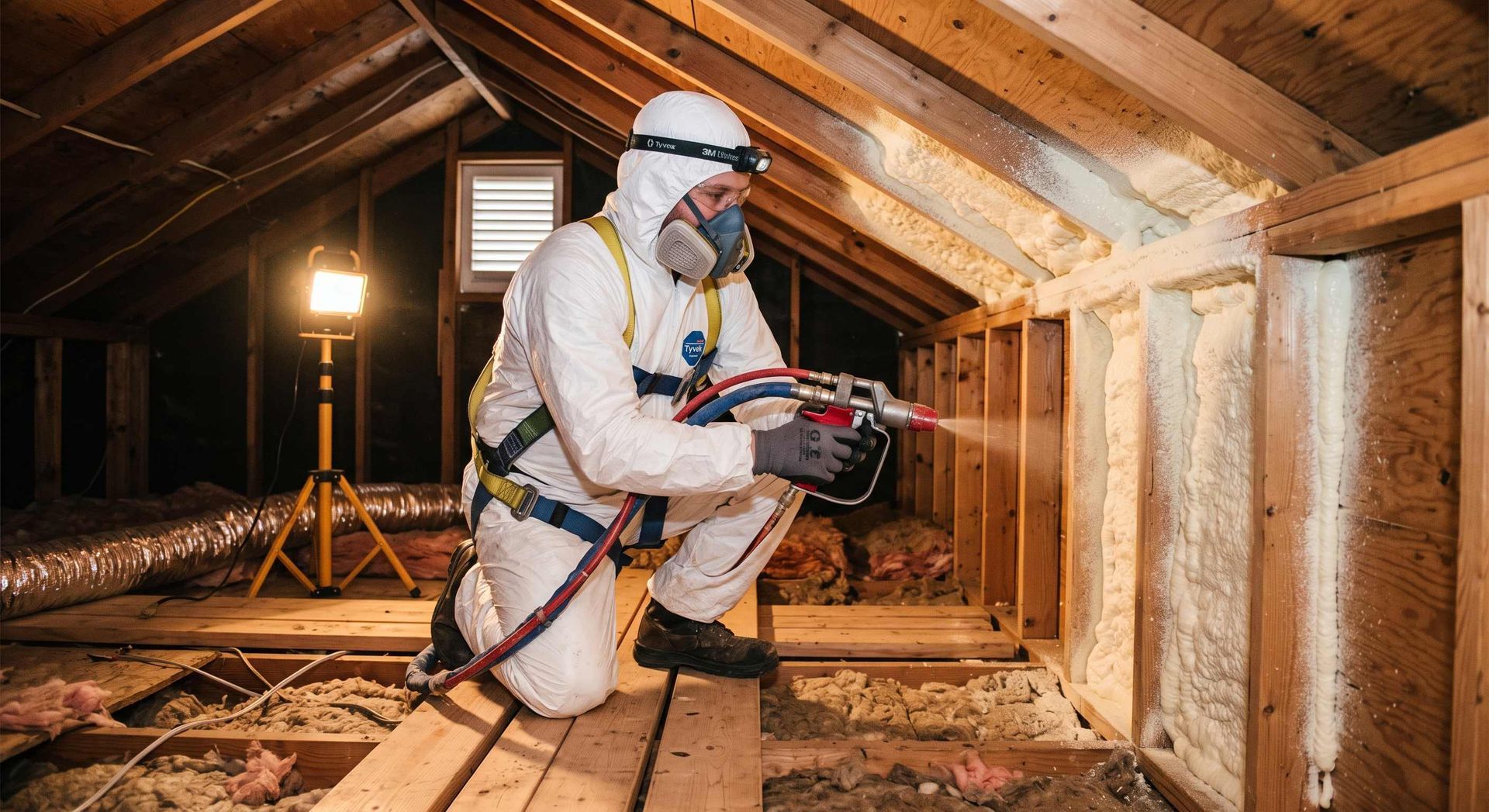
Desert heat can push roof decks, metal panels, and framing to high surface temperatures. Product makers publish temperature ranges for a reason. The installer needs to work within the limits for the chemical system being used. Some homes benefit from more than one heat-control method. Heat and air leaks can affect more than the upper parts of a home. Gaps below the living area can let outside air enter and make temperature control harder. Learn how crawl space insulation can help limit air movement beneath the home.
The same house can present different conditions in the morning and late afternoon. Direct sun can heat one roof slope more than another. Metal buildings can change temperature fast. Good crews account for those changes instead of treating every surface the same.
This is one reason a very low per-inch price can mislead buyers. The customer is not buying liquid by the inch. The customer is buying a finished building assembly that needs to bond, cure, and perform as intended.
Cheap Material Can Become Expensive Rework
Bad spray work is hard to fix after walls are covered or a roof cavity is finished. Failed material may need to be cut, scraped, or removed from framing. Access can raise labor cost. Electrical lines, plumbing, ducts, and finishes can make removal harder.
A second contractor may need to diagnose the failure, remove affected material, prepare the surface again, and install a new system. The owner then pays for work twice and loses time.
That does not mean every low bid leads to failure. It means the cost of a failure is high enough to justify checking the product and scope before signing.
Questions Worth Asking Before You Hire
Start with the product name. Ask who makes it and whether the contractor can provide the technical data sheet and safety data sheet. Ask whether the containers will arrive with readable labels and batch information.
Then ask about the job itself. Confirm open-cell or closed-cell material, target thickness, square footage, prep work, ventilation, and any required protective layer. Ask what the written warranty covers and who handles a product concern after installation.
A contractor who answers these questions clearly gives you something far more useful than a vague claim that their material is premium.
Why Documentation Protects the Property Owner
Records can matter years after installation. A future buyer, building inspector, roofer, or remodeling contractor may need to know what sits inside a wall or roof assembly.
Keep the proposal, paid invoice, product name, technical sheet, warranty, and any photos taken during the job. Those records can reduce guesswork later.
For large projects, ask the installer to note the product and target thickness directly on the final invoice. That creates a simple record tied to the property.
Price Should Be Compared by Scope, Not by One Number
A quote advertised at a very low price per inch may leave out several details. A lower quote may use a different material or installation method. Property owners comparing options should look at coverage, R-value, air sealing, and expected lifespan. Our blown-in insulation services page explains another common choice for attics and other open areas.The number may apply to one product type, one thickness range, a large minimum job, or material only. It may exclude prep, access, masking, disposal, travel, or a required protective coating.
Ask every bidder to price the same scope. The comparison becomes much more useful once the material type, thickness, square footage, prep, and warranty match.
Buckeye Insulation Pros provides clear, upfront quotes so property owners can see what they are paying for. That kind of transparency matters more than a headline price with missing details.
A Better Way to Buy Spray Foam in Buckeye
Do not choose a system from price alone, and do not reject a product from country of origin alone. Ask for facts that can be checked. Know the product. Know the thickness. Know the scope. Know the warranty.
A strong project starts with clear documentation and a contractor who will stand behind the finished work. That protects your home, your budget, and your ability to solve a problem later.
Frequently Asked Questions About Very Low Spray Foam Prices
Is cheap spray foam always bad?
No. Price does not prove quality. A low quote should prompt questions about product identity, thickness, prep, labor, documentation, and warranty. A well-documented product installed within the maker’s requirements can be a good value.
What paperwork should I ask to see?
Ask for the technical data sheet, safety data sheet, product name, manufacturer, and any code evaluation document that applies to the intended use. The installer should be able to explain the documents in plain language.
Can I ask to see the product containers before installation?
Yes. Product labels help confirm the manufacturer and material being used. Photos of the labels and batch information can be useful project records.
Why can two spray foam bids be so far apart?
The bids may use different cell types, thicknesses, coverage areas, labor scopes, prep methods, warranties, or protective coatings. Compare the written scope before comparing the final number.
Is imported spray foam unsafe?
Imported material is not unsafe by definition. The same review should apply to domestic and imported products. Look for traceable manufacturing, technical documentation, code support where needed, and professional spray work.